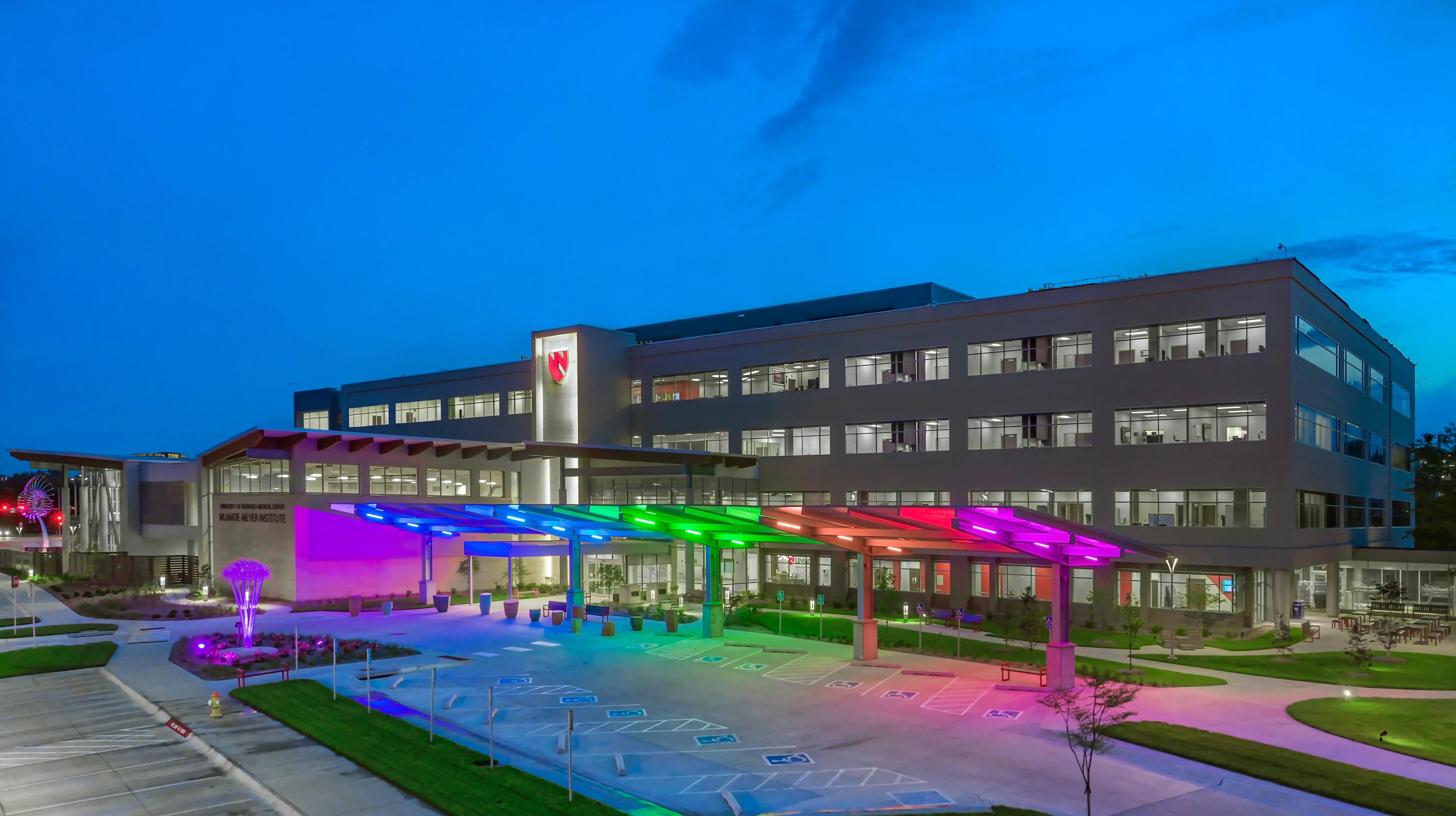

Munroe-Meyer Institute – Comprehensive Clinical & Educational Facility
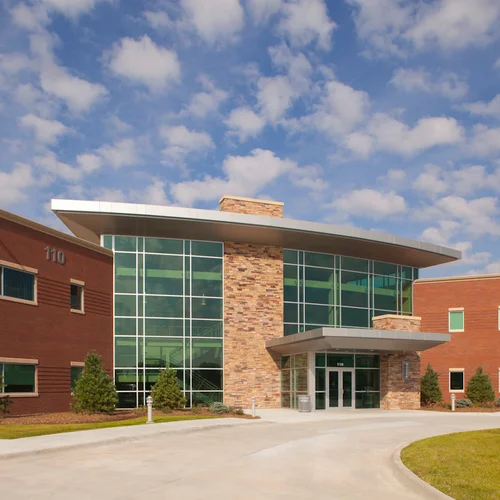
\nThe Munroe-Meyer Institute at the University of Nebraska Medical Center serves individuals with a wide range of disabilities and complex healthcare needs, providing specialized care, education, research, and community outreach across the lifespan. Designed to support this mission, the new Munroe-Meyer Institute facility—opened in June 2021—creates a highly specialized, inclusive environment that addresses the diverse clinical, therapeutic, and family-centered needs of its patients.
\nThe Institute’s goal is to be a world leader in transforming the lives of individuals with disabilities and complex healthcare needs through extraordinary patient care, premier educational programs, innovative research, and meaningful community engagement. The new building directly supports this vision by bringing a broad spectrum of services together under one roof in a thoughtfully designed, purpose-driven setting.
\nComprehensive Services Under One Roof
\nThe facility accommodates a wide range of departments, each with distinct functional and environmental requirements, including:
\n- \n
- \n
Early Intervention Preschool, specifically designed for children on the autism spectrum
\n \n - \n
Caring for Champions Program, a collaboration with Special Olympics providing vision, dental, and weight management services
\n \n - \n
Severe Behavior Department, supporting patients with intensive behavioral health needs
\n \n - \n
Recreational Therapy, including a summer camp program
\n \n - \n
Speech, Occupational, and Physical Therapy (ST/OT/PT)
\n \n - \n
Outpatient Clinical Services
\n \n - \n
Pediatric Feeding Program
\n \n - \n
Therapy pool for aquatic rehabilitation
\n \n - \n
Mock apartment, enabling patients to practice independent living skills
\n \n - \n
Indoor gymnasium supporting physical therapy, recreation, and adaptive programming
\n \n
This diverse programmatic mix required a facility that could seamlessly support clinical treatment, education, therapy, recreation, and family engagement—while remaining flexible, intuitive, and welcoming.
\nDesigning for Sensory Sensitivity and Family Support
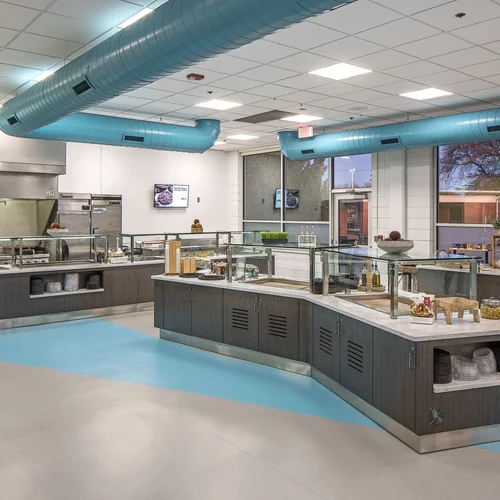
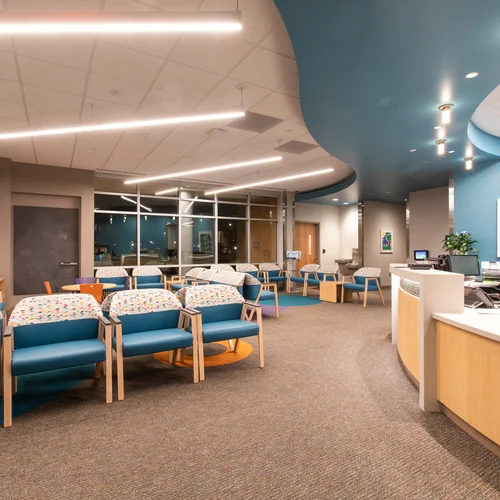
\nA central design priority was the building’s impact on sensory experience, recognizing that many patients are highly sensitive to environmental stimuli. The design team carefully considered how lighting, acoustics, color, texture, and materiality affect comfort, behavior, and emotional well-being.
\nKey sensory-responsive strategies include:
\n- \n
- \n
Dimmable lighting systems to accommodate varying sensitivity levels and therapeutic needs
\n \n - \n
Acoustical treatments to reduce noise, echoes, and auditory overstimulation
\n \n - \n
Thoughtful color transitions that support wayfinding while avoiding visual overload
\n \n - \n
Carefully selected materials and textures that promote calm, durability, and safety
\n \n
Equally important was the facility’s ability to support families and caregivers, providing spaces that encourage comfort, observation, participation, and respite while maintaining dignity and privacy for patients.
\nA Recognized Model for Inclusive Healthcare Design
\nThe Munroe-Meyer Institute facility stands as a model for how architecture can positively influence care delivery for individuals with disabilities and complex healthcare needs. By prioritizing sensory responsiveness, flexibility, and inclusivity, the building empowers patients, supports families, and enhances the effectiveness of clinical and therapeutic programs.
\nIn recognition of its thoughtful approach and impact, the project received an Honorable Mention from Healthcare Design Magazine—underscoring its success as both a functional healthcare environment and a compassionate, human-centered place of care.
Project Details
- Location
- Omaha, NE
- Completed
- March 2024
- Size
- 220,078 sq ft
Loading map...
Similar Projects
Explore more of our healthcare architecture projects.