How does architectural design help patient recovery

Architectural design can play a powerful role in supporting patient recovery by shaping the physical and psychological conditions in which healing takes place. Research from healthcare design, environmental psychology, and medicine shows that well-designed spaces can reduce stress, improve clinical outcomes, and enhance overall well‑being.
1. Reducing Stress and Anxiety
Stress negatively affects the immune system, pain perception, and healing speed. Architectural design can lower stress through:
- Access to natural light: Sunlight helps regulate circadian rhythms, improves mood, and supports sleep quality.
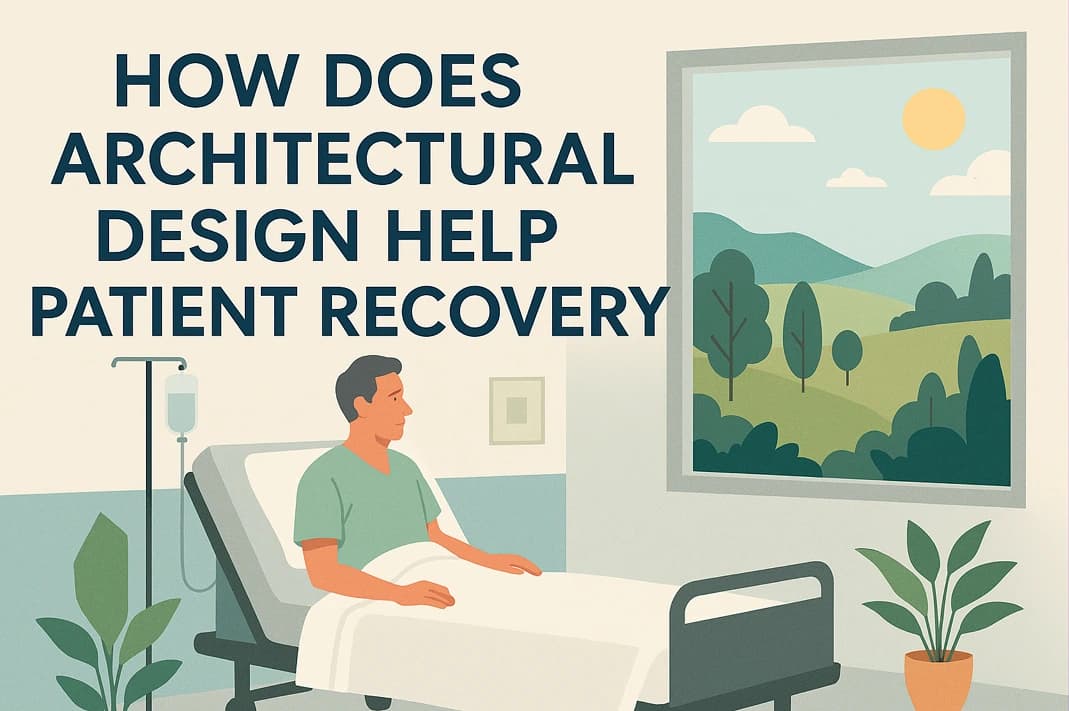
- Views of nature: Seeing greenery, gardens, or landscapes has been linked to lower blood pressure and reduced anxiety.
- Calm aesthetics: Soft colors, natural materials (wood, stone), and uncluttered layouts create a sense of safety and calm.
Even passive exposure to nature (such as through a window) has been shown to reduce recovery time and pain medication use.
2. Supporting Better Sleep and Rest
Sleep is essential for healing, yet hospitals are often noisy and disruptive. Architecture can help by:
- Designing quiet zones and acoustically treated rooms
- Separating patient areas from high-traffic corridors
- Using indirect lighting and dimmable fixtures to reduce nighttime disturbance
- Allowing individual control over lighting and temperature
Better sleep supports immune function, tissue repair, and emotional resilience.
3. Enhancing Sense of Control and Dignity
Feeling powerless can slow recovery. Good design helps restore autonomy by:
- Providing single-patient rooms for privacy
- Allowing patients to control lighting, temperature, and blinds
- Designing clear layouts that reduce confusion and disorientation
- Ensuring accessible bathrooms and furniture that support independence
A sense of control is linked to lower stress hormones and improved emotional health.
4. Improving Social Support and Connection
Human connection is a key factor in recovery. Architecture can encourage it by:
- Creating comfortable family spaces in patient rooms
- Designing welcoming waiting areas rather than sterile ones
- Including communal lounges or healing gardens
- Making staff areas visible and approachable
Patients who feel socially supported often show better mental health and recovery outcomes.
5. Promoting Physical Movement and Rehabilitation
Movement speeds recovery and prevents complications. Architecture can encourage safe activity through:
- Wide, well-lit corridors that invite walking
- Visual cues and destinations (artwork, windows, gardens)
- Accessible outdoor spaces for gentle exercise
- Rehabilitation areas integrated into patient units
Design that encourages movement reduces muscle loss, improves circulation, and boosts confidence.
6. Supporting Staff Performance (Indirect Patient Benefit)
Patient recovery is closely tied to staff well-being. Architecture helps by:
- Reducing staff fatigue through efficient layouts
- Providing daylight and quiet spaces for clinicians
- Improving visibility and wayfinding to reduce errors
- Minimizing noise and interruptions
When staff are less stressed and more focused, patient care improves.
7. Infection Control and Safety
Healing requires safety. Architectural design supports this by:
- Using materials that are easy to clean and antimicrobial
- Designing proper ventilation and air filtration systems
- Separating clean and contaminated zones
- Reducing crowding through spatial planning
These measures lower infection rates and complications.
8. Emotional and Psychological Healing
Recovery is not only physical. Architecture can support emotional healing by:
- Creating spaces that feel human rather than institutional
- Incorporating art, color, and cultural sensitivity
- Designing environments that foster hope and normalcy
Patients who feel emotionally supported are more engaged in their recovery process.
In Summary
Architectural design helps patient recovery by:
- Reducing stress and anxiety
- Improving sleep and comfort
- Supporting autonomy and dignity
- Encouraging movement and social connection
- Enhancing safety and care quality
Well-designed healthcare environments act as active participants in healing, not just containers for medical treatment.
Below are well-documented examples from real hospitals and clinics, followed by a clear explanation of how these projects connect to evidence‑based design (EBD) research.
1. Nature, Views, and Daylight
Example: Patient Rooms at Pennsylvania Hospitals (Ulrich Study)
Built context
In a suburban Pennsylvania hospital, some post‑surgery patient rooms faced trees, while others faced a brick wall. The rooms were otherwise identical.
Measured outcomes
- Patients with tree views:
- Recovered faster
- Required fewer pain medications
- Had fewer negative nurse notes
[plantplan.co.uk]
Evidence‑based design link
This landmark 1984 study by Roger Ulrich became the foundation of evidence‑based healthcare architecture, demonstrating that environmental features can measurably influence clinical outcomes. It directly supports:
- Large windows
- Orientation toward landscapes
- Integration of gardens and courtyards
[healthdesign.org]
Example: Khoo Teck Puat Hospital, Singapore
Design features
- Open-air corridors
- Extensive gardens visible from wards
- Natural ventilation and daylight throughout the hospital
Outcomes
- Lower reported patient stress
- Improved patient satisfaction
- Reduced energy use, supporting thermal comfort
Evidence‑based design link
Later studies confirm that natural daylight shortens length of stay and improves circadian rhythm regulation, validating the hospital’s design approach.
[bioone.org], [ijahss.net]
2. Maggie’s Centres: Architecture as Psychological Care
Example: Maggie’s Cancer Care Centres (UK)
Built context Maggie’s Centres are located next to major NHS hospitals but are not hospitals themselves. Designed by architects such as Frank Gehry, Zaha Hadid, OMA, and Heatherwick Studio, they intentionally reject institutional aesthetics.
Design characteristics
- Domestic-scale rooms
- Central kitchens and fireplaces
- Gardens and intimate courtyards
- Abundant daylight and natural materials
[architizer.com], [archdaily.com]
Measured impact
- Reduced anxiety and emotional distress
- Increased sense of control and dignity
- Strong social support and peer interaction
Evidence‑based design link
Research frameworks (e.g., Ulrich; DuBose et al.) identify control, privacy, social support, and positive distraction as core healing variables. Maggie’s Centres embody these variables architecturally rather than medically.
[interiored...tors.co.uk], [re-thinkin...future.com]
3. Single‑Patient Rooms and Infection Reduction
Example: New Montreal Hospital (100% Private Rooms)
Built context Patients were moved from a 417‑bed hospital with shared rooms to a new facility with 100% single‑patient rooms, each with private bathrooms.
Measured outcomes
- Significant reduction in:
- MRSA colonization
- Vancomycin‑resistant Enterococcus (VRE)
- Improved privacy and patient comfort
[jamanetwork.com]
Evidence‑based design link
A 2024 systematic review and meta‑analysis found that single‑patient ICU rooms reduce nosocomial infection rates by ~32%, strongly supporting private-room layouts.
[frontiersin.org]
This evidence has directly influenced modern hospital guidelines in North America and Europe.
4. Noise Reduction and Sleep Quality
Example: Fiona Stanley Hospital ICU, Australia
Design intervention
- Acoustic wall treatments
- Improved ceiling absorption
- Noise modeling during renovation
Measured outcomes
- Reduced ICU noise levels
- Improved patient sleep
- Reduced staff fatigue
[journals.sagepub.com]
Evidence‑based design link
Studies show hospital noise routinely exceeds WHO limits and is linked to:
- Sleep deprivation
- Slower healing
- Increased stress hormones
[healthcare...gazine.com], [healthdesign.org]
This research justifies:
- Acoustic zoning
- Quiet patient corridors
- Sound‑absorbing finishes
5. Evidence‑Based Design (EBD): The Research Framework
Definition
Evidence‑based design applies rigorous scientific research to architectural decisions, paralleling evidence‑based medicine.
[dergipark.org.tr]
Key EBD principles validated by research
Design Feature Proven Effect
Natural light
Shorter hospital stays
Nature views
Reduced pain and stress
Single rooms
Lower infection rates
Noise control
Better sleep, faster healing
Clear layouts
Reduced anxiety and errors
Major institutions supporting EBD
- The Center for Health Design
- Robert Wood Johnson Foundation
- WHO healthcare environment studies
Key Takeaway
Architecture is not neutral in healthcare.
Hospitals like Maggie’s Centre's, Khoo Teck Puat Hospital, and modern single‑room facilities demonstrate that design decisions, when guided by evidence, become clinical interventions.
Written by
Get the next article delivered straight to your inbox.
We hate spam too and promise to respect your inbox.